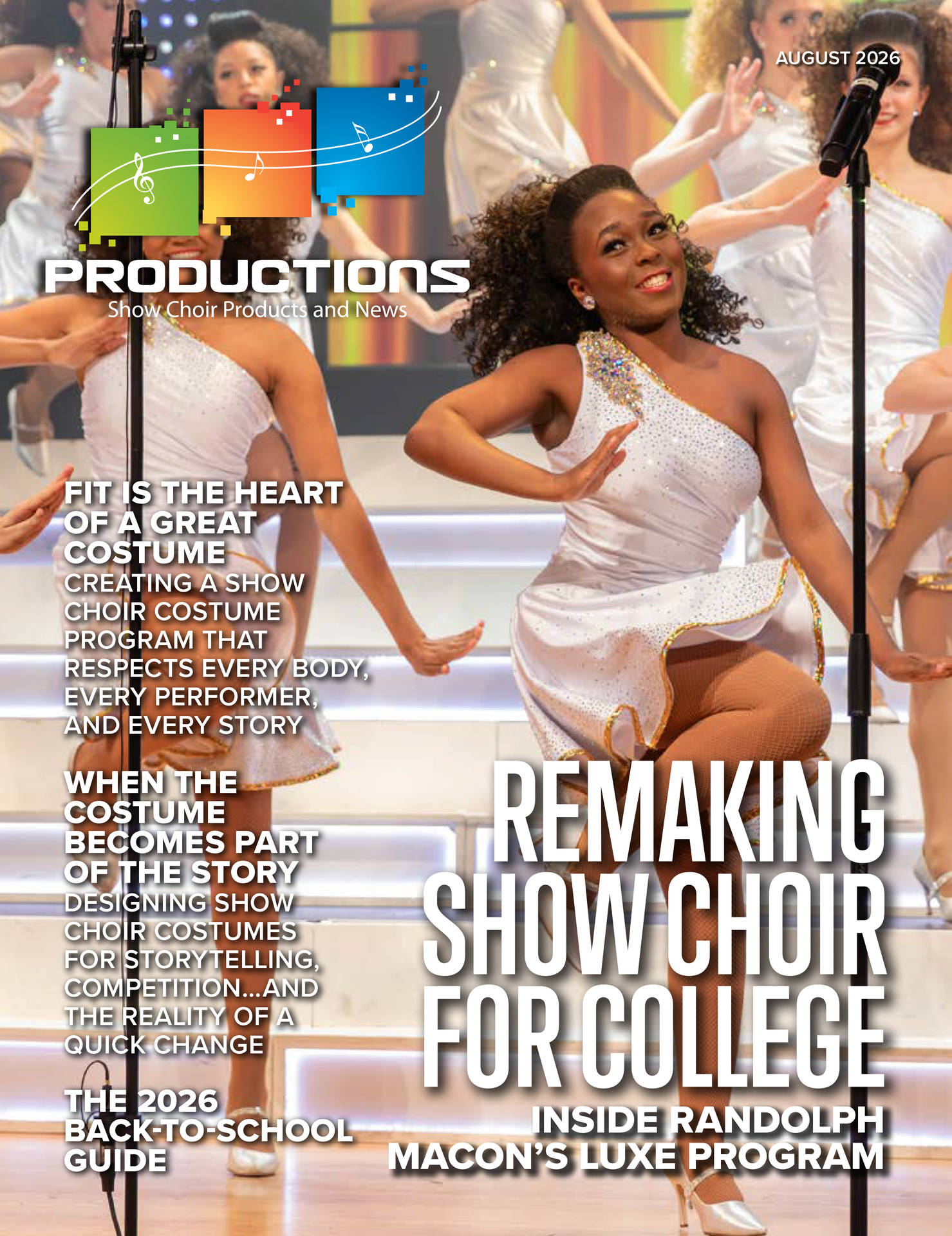



That moment can be exciting—but it can also be surprisingly emotional.
For some students, putting on a performance costume is the first time they have ever worn something designed to put them completely in the spotlight. A costume can make a performer feel powerful, confident, and transformed. It can also make a student feel self-conscious if it does not fit correctly, does not move comfortably, or makes them feel as though their body is being judged.
That is why experienced show choir programs understand that costuming is about much more than selecting a color, style, or theme. It is about outfitting an entire group of individual performers with dignity, practicality, and confidence.
There Is No Standard Show Choir Body
A show choir may have 20 performers or 60. Regardless of the size, there is one thing every group has in common: the students will come in different shapes, heights, and proportions.
Some will have long torsos. Some will have shorter torsos. Some will need a different inseam than another student wearing the same size. Some will prefer more coverage. Others may be perfectly comfortable with a more fitted costume.
None of those differences should be treated as unusual.
The goal should not be to make every performer look like the same person. The goal is to make the ensemble look unified while allowing every performer to feel comfortable being themselves.
That begins with changing the way fittings are approached.
A fitting should never become a public discussion about a student’s body. Measurements, sizing concerns, and alterations should be handled privately and professionally. A student should never feel that they’re holding up the group because they need a different size.
An experienced costume team learns quickly that the number on a garment tag is far less important than the way the garment fits and functions.
Fit Is About More Than Appearance
When evaluating a costume, ask practical questions.
Can the performer breathe comfortably?
Can they sing without restriction?
Can they raise their arms?
Can they bend, jump, kick, turn and dance?
Can they sit or kneel if the choreography requires it?
Does the costume remain secure during movement?
Does anything pinch, rub or pull?
And perhaps most importantly: Does the performer feel comfortable wearing it?
A costume that looks beautiful while a student is standing still but restricts movement during choreography is not a successful costume.
Show choir is an athletic activity as well as a musical and theatrical one. Performers are asked to sing, dance, move through formations, execute choreography and maintain facial expression and character—all while wearing the clothing selected for the production.
That makes functionality inseparable from fit.
Aim for Cohesion, Not Sameness
Uniformity is important visually, but identical garments do not necessarily create a uniform appearance.
Sometimes the best way to make a group look cohesive is to use the same basic costume design with individualized alterations.
One student may need a hem shortened. Another may need additional length. Someone else may need a different cut or a small adjustment to a waistband or shoulder.
Don’t look at alterations as inconveniences—they are key to producing a professional-looking show.
A good costume supplier will understand that group orders frequently require different sizes, alterations, and sometimes different garment configurations. Before placing a large order, ask about sizing samples, return policies, customization and the availability of replacement pieces.
And never assume that the sample costume will work simply because it looks good on one performer.
Put the costume on several different body types before committing to a large order whenever possible.
Think About Coverage and Confidence
One of the most delicate areas of show choir costuming is determining how much skin is appropriate for a particular production.
The answer should never be based solely on what is currently fashionable.
Consider the age of the performers, the choreography, the venue, the audience, the lighting, and the story being told. Most importantly, consider whether the costume allows the student to concentrate on performing rather than worrying about whether something is going to move, ride up or expose more than intended.
Confidence is part of performance quality.
A student who spends an entire song wondering whether their costume is secure cannot give the same performance as a student who trusts what they are wearing.
That does not mean every costume needs to be conservative. It means every costume needs to be intentional.
If a particular design requires a performer to continually adjust it, pull it into place or compensate for it during choreography, the design needs another look.
Listen to the Students
The adults choosing costumes may have years of experience, but the students are the ones who will be wearing them.
That makes their feedback valuable.
There is a difference between allowing students to dictate a costume design and giving them a safe opportunity to explain how a costume feels.
A student might say, “I can’t lift my arms comfortably.”
Another might say, “I don’t feel secure in this top.”
Someone else might simply say, “I don’t feel like myself in this.”
Those comments deserve consideration.
The answer should not automatically be, “That’s just how the costume is.”
Instead, ask whether an alteration, different undergarment, additional layer, different size, or modified version can solve the problem without compromising the overall design.
Be Particularly Thoughtful About Adolescents
Show choir performers are often teenagers, which means they are still growing and changing.
A costume that fits beautifully in September may not fit the same way in January.
That makes early ordering and fittings important—but it also makes flexibility important.
Avoid purchasing costumes so early that there is no practical way to accommodate changes in the performers. Keep a small contingency budget for alterations and replacement pieces.
It is also worth remembering that students may be more sensitive about their bodies than they let adults know.
A casual comment made during a fitting can stay with a teenager for a long time.
Comments such as “You need to lose weight for this costume,” “That doesn’t look good on you,” or “We need to hide that” have no place in a healthy costume process.
The conversation should be about the garment—not the worth or appearance of the person wearing it.
Instead of saying, “That doesn’t work on your body,” say, “Let’s find a cut that gives you the movement and coverage you need.”
The distinction is significant.
Undergarments and Support Matter, Too
Costume planning should include what goes underneath the costume.
Depending on the design, performers may need specific undergarments, dance shorts, camisoles, tights, supportive garments or other base layers.
Those items should be considered before the final costume is approved.
A costume can fit perfectly on its own and still fail once the performer adds the necessary underlayers.
Make sure students know what will be required well before competition day. Families should have time to purchase appropriate items, and directors and boosters should have time to determine whether the combination works.
The Best Costumes Disappear
Perhaps the greatest compliment a costume can receive is that nobody notices it.
The audience should notice the performer.
The costume should support the performer.
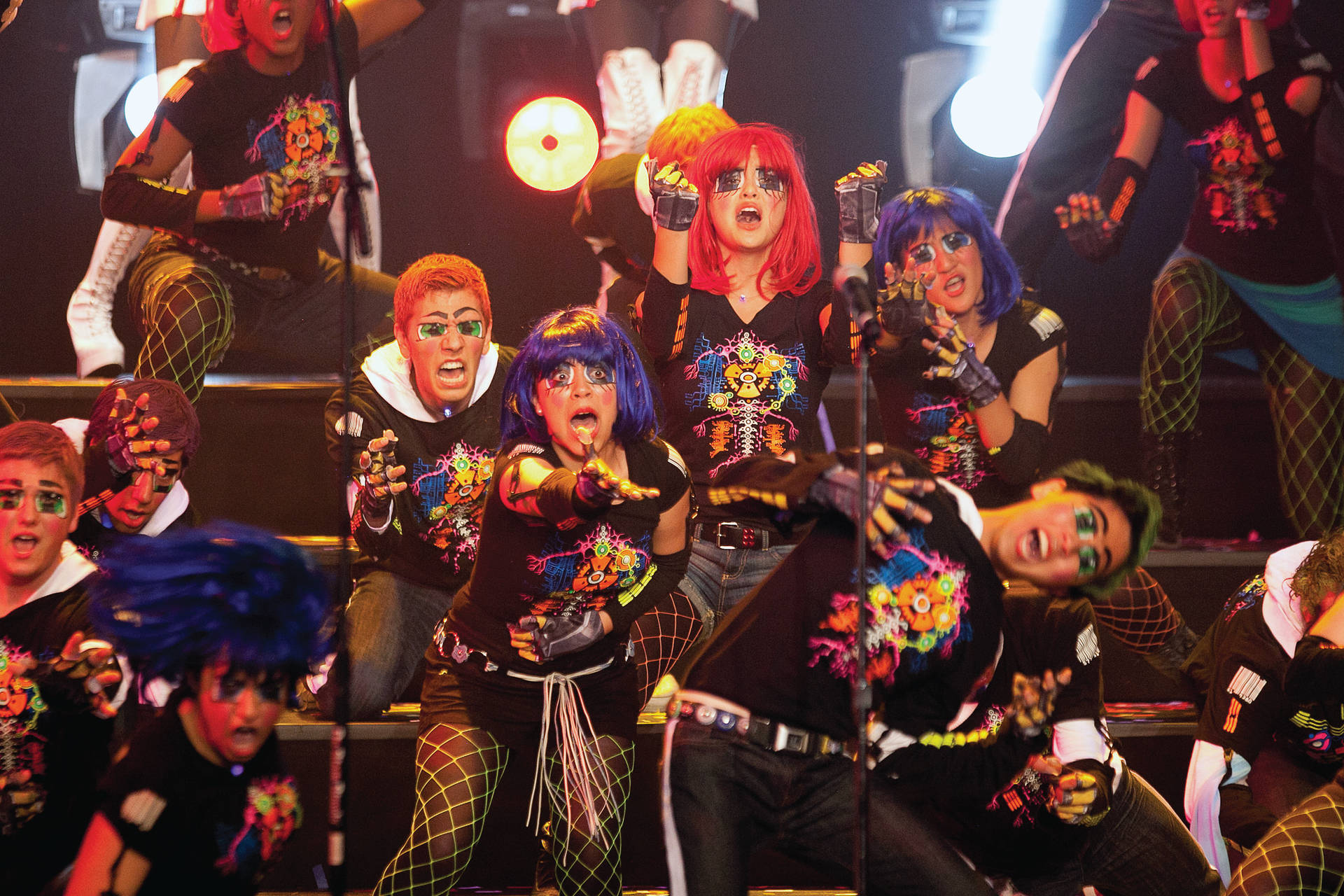
It should help create the character, establish the era, reinforce the color palette and make the choreography visually stronger. But it should never become a source of distraction or embarrassment.
When the costume fits correctly, moves naturally and gives the performer confidence, something important happens: the student forgets about the clothing and becomes absorbed in the performance.
That is the goal.
A Culture of Respect Starts in the Costume Room
The costume room can become one of the most positive spaces in a show choir program when everyone involved understands the responsibility that comes with it.
Directors set the tone. Boosters reinforce it. Costume volunteers model it. Students learn from it.
The message should be simple: Every performer belongs on this stage, and every performer deserves a costume that allows them to perform at their best.
A successful show choir costume program does not try to make every body look identical. It creates a unified visual picture while respecting the individual people inside those costumes.
After all, show choir is ultimately about people.
The costumes are important. The choreography is important. The music is important.
But when the lights come up, it is the students who tell the story.
They deserve to feel confident enough to tell it.