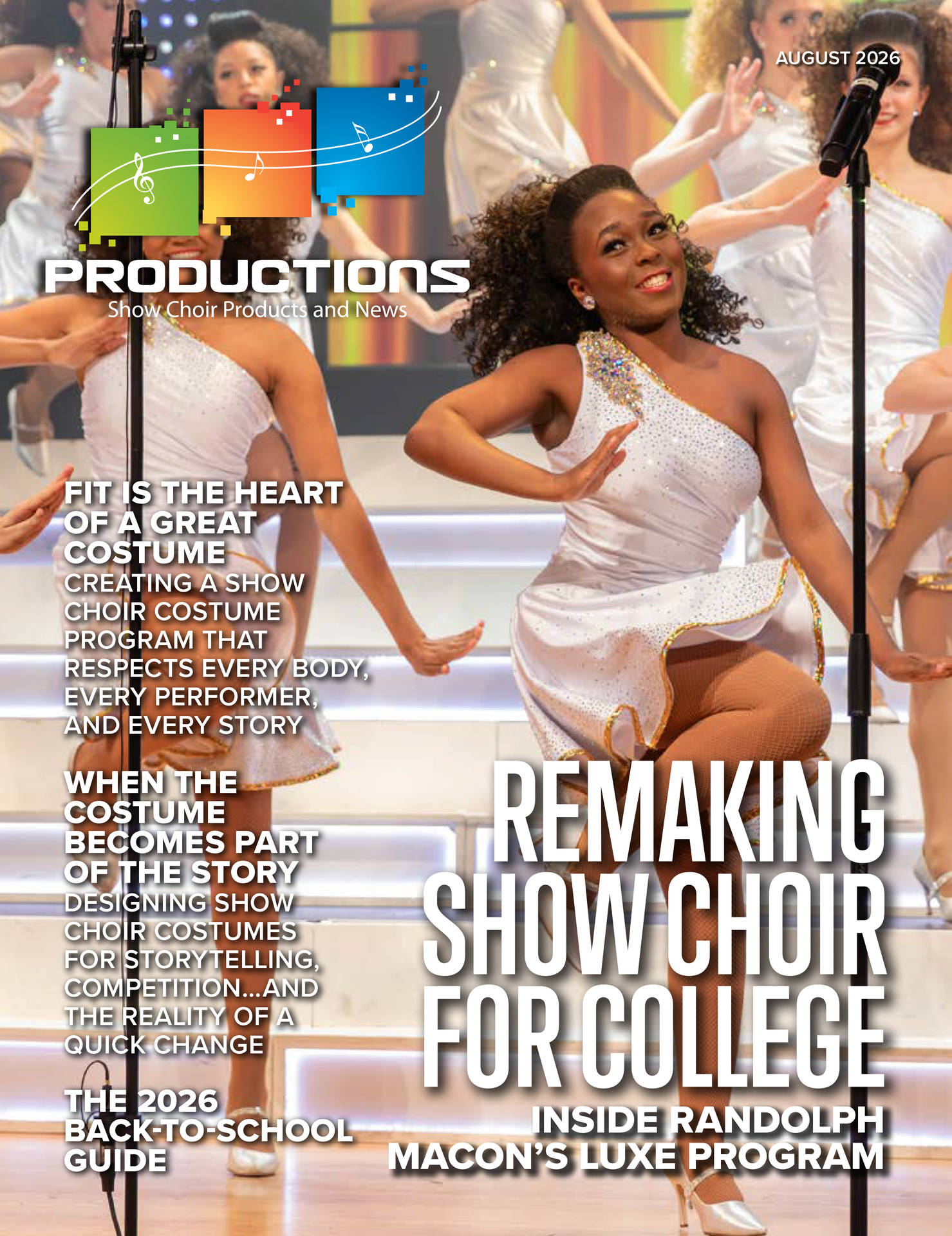



At Randolph‑Macon College, Adam Pulver is determined to change that. “If an institution of higher education is looking to grow their arts in any capacity—vocal, dance, band, musical theatre—they should start a show choir,” says Pulver, who was recruited by the college in 2018 to create a show choir program from scratch.
Pulver, who previously launched and directed a show choir at a university in Illinois, is happy to challenge the status quo. He’s eager to show that students they can have it both ways, earning a degree while still enjoying the activity they love.
And students are responding. Some come to Randolph‑Macon specifically because they want to keep performing; others discover LUXE after they arrive and realize how much they’ve missed the stage. For many, the chance to stay connected to show choir becomes a defining part of their college experience.
Ashlynn Kenney says high‑school show choir played such a big role in her life that she knew she wanted to keep performing in college. “The main attraction for Randolph‑Macon for me was show choir,” she says. “And I ended up falling in love with the school.”
Others find LUXE later. Ryon Britt began his college career at another school but quickly realized how much he missed performing. After meeting Pulver at high‑school competitions and clinics, he recognized an opportunity to change course. “I felt like I really needed musical theatre as part of who I am,” he says. “I finally came, and it was honestly the best thing I could have done.”
A Valuable Recruitment Tool
Their stories, and countless others like them, help prove an essential hypothesis: that show choir not only offers a much‑needed creative outlet for its participants and a cultural touchstone for the community—it’s a valuable recruitment tool for Randolph‑Macon. Pulver sees it as a win for the students and for the university. “The business side of my job is to bring in high-quality talent, high quality human beings who have hearts of gold and want to keep performing while they can until they go into their chosen career path,” he says. “And it is a retention tool for high caliber students to stay at the university.”
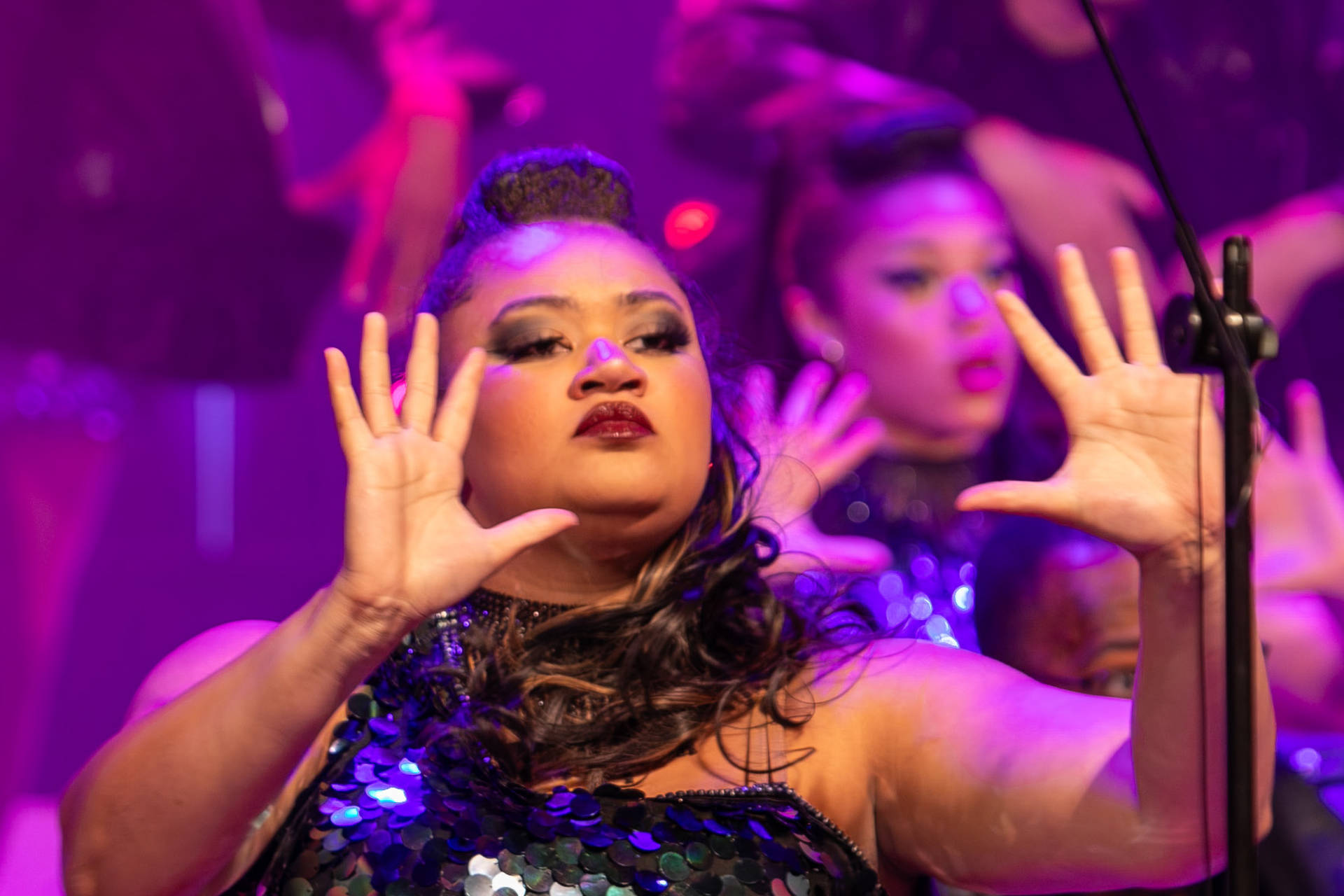
LUXE is currently 50-60 students strong, including the singer/dancers, band members, and tech crew. Pulver has never taken attendance. “They all choose to be here,” he says. “They want to be here, they all walk hard, and they all have this similar mindset. I love the passion, love the excitement, love the interest of the students.”
They put on two big shows a year—an annual Christmas show and a spring show that tends to be a little edgier, taking full advantage of creative license. Pulver describes the Christmas show as a crowd-pleaser—who doesn’t love a Christmas show?—that in the wrong hands risks being safe and predictable. He works hard to make sure that doesn’t happen.
“It gives me a unique challenge: how do I do Christmas differently?”, Pulver says. “So this year, our Christmas show is “A LUXE Hallmark Special” where we are making fun of the most overdone Hallmark tropes you can think of, and it is hysterical. The students are going to have so much fun.”
Pulver has ideas about the spring show, too, as yet unrevealed. “Since we have a Christmas show, the students always like the opposite of that, something darker, eerie, and creepy with a little anger and vengeance, though that has been shifting lately,” he says. Beyond the theme itself, Pulver thinks carefully about how each show comes together. He doesn’t build them in isolation. “I write some crazy cool shows, but I don’t always do it alone. Sometimes the students help me design shows and develop ideas, because that gives them an experience they might not have had. And so then for my future music educators, potentially arrangers, or you name it, I’m giving them an opportunity as well as guidance so they learn from it.”
Pulver also makes a point of providing support when possible to high-school students by judging competitions, leading clinics, and working with programs throughout Virginia and across the country. Clinics in particular give him a chance to get to meet the aspiring performers and watch them develop in their skills. “I hope to inspire them,” he says. “You could also say I’m recruiting students, but for me, I’m just excited to see them grow.”
More Than Performers
Talking with Pulver in his impeccably decorated office on campus, it’s clear he still feels awe at the privilege of running a funded program fully integrated into an esteemed college like Randolph‑Macon.
Part of that rootedness includes the fact that LUXE does not travel, which Pulver sees as more of a plus than a limitation. The choir always has the home‑auditorium advantage, enabling them to create more elaborate sets, incorporate more technology, and control details in ways that would be the envy of a high‑school director on a tough competition day. (Competition is also off the table for now, given the scarcity of similar collegiate programs.)
“What high‑school show choir does — it’s like putting on a traveling Broadway show. I am enamored of them,” Pulver says. “But for what we do, when you come and see it, it’s just ‘wow.’ I have a few secrets up my sleeve, and we can only do it here. And if I’m going to bring everyone here to see the show, I’m going to give them an experience.”
Pulver says he never tires of talking about his students, and the pride he shows in them is mutual. They describe his focus on details that can border on obsessiveness—until everything finally clicks. For Nathan Adkins, one of the biggest surprises was Pulver’s dismissal of hierarchy. “One of the culture shocks coming from high school is that Mr. A doesn’t do ‘captains,’” he says. “In high school you’ll have dance captains and vocal captains, and we don’t have that in LUXE. He makes a point of saying that everybody is a captain when they feel comfortable enough in a piece of choreography or a piece of vocals to lead the group, because everybody has different strengths. That’s one of the many examples of him trying to tailor one program to 60 individual students all at the same time. And I think that is what makes us so strong as a group.”
For Emily Dixon, the strength comes from the bonds among the members—including Pulver himself. “I personally didn’t have a very good experience with show choir in high school,” she says. “But when I came and auditioned here, and saw how the students interacted with one another, it made me fall in love with the program. We definitely have our moments, but what family doesn’t? What’s different about this program is that Mr. A focuses on show choir, but he also focuses on you as a person. He pushes us to be the best performers and people that we can be.”