



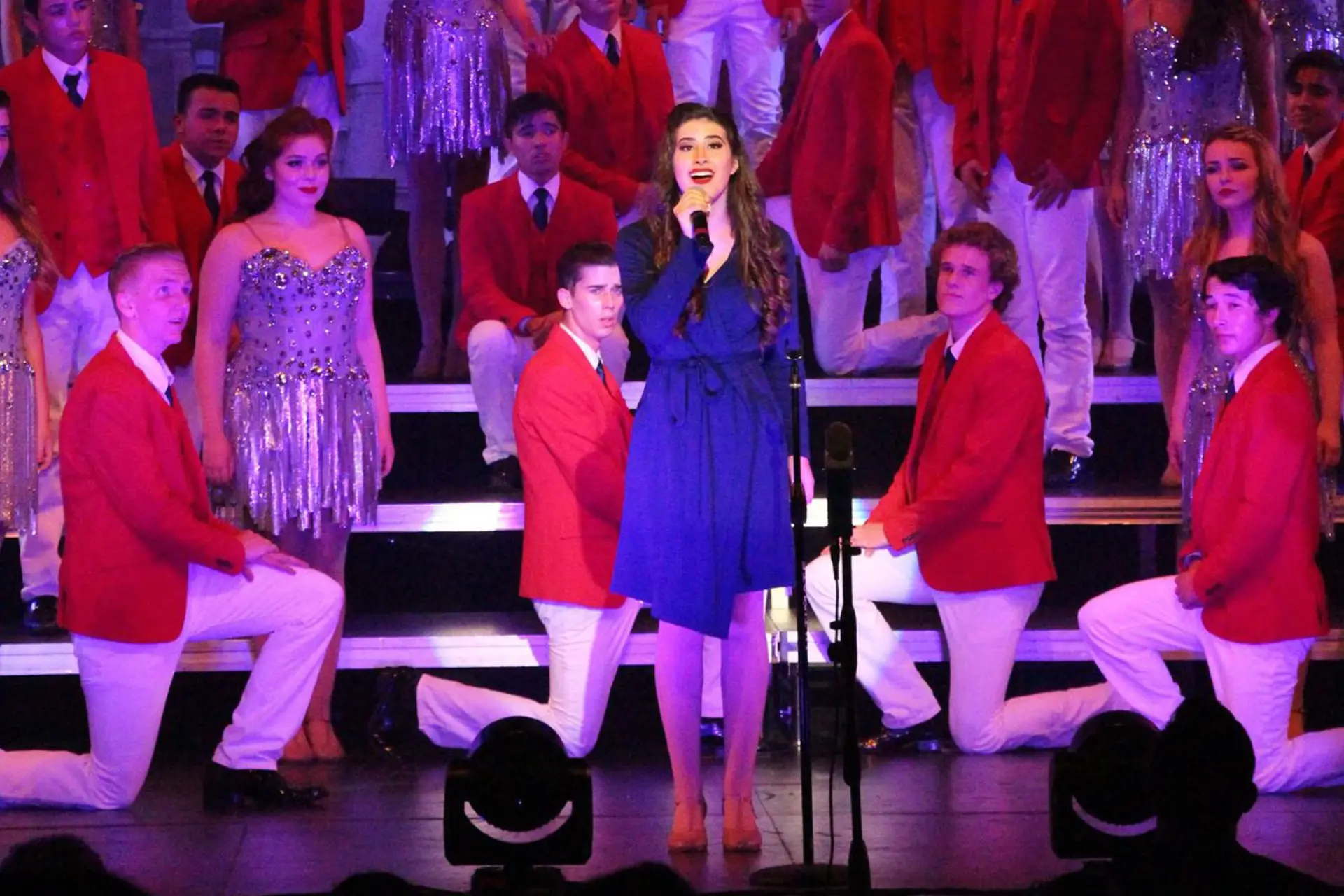
The lights go down. The opening notes hit. The first formation snaps into place, and months of rehearsals, choreography, costume fittings, and fundraising finally come together on stage.
For show choir directors, that moment is the payoff. But getting there takes much more than learning the music.
Choosing competitions, coordinating travel, managing budgets, preparing costumes, arranging transportation, and keeping students and families informed can make the show choir season feel like a production of its own. That’s why Productions is bringing directors and booster organizations a working guide to the 2026–2027 U.S. show choir competition season.
Whether your group is preparing for its first invitational or building a schedule around major championship events, planning early can make the difference between a season that runs smoothly and one that leaves everyone scrambling.
Start with the Calendar
Show choir competitions take place across the country throughout the school year, with many events concentrated between January and March. Fall festivals and early-season events provide opportunities to evaluate a new show, while winter and spring competitions bring increasingly busy schedules for directors, performers, and their support teams.
Several events worth investigating for the 2026–2027 season include:
Perry Show Choir Festival — Perry, Ohio
Waukee Star Struck — Waukee, Iowa
Ball State Mid-America Show Choir Championship — Muncie, Indiana
Albertville Diamond Classic — Albertville, Alabama
Oak Mountain King of the Mountain Invitational — Birmingham, Alabama
Churubusco Show Choir Invitational — Churubusco, Indiana
L.D. Bell HEB Show Choir Invitational — Hurst, Texas
Noblesville Indiana Show Choir Championships — Noblesville, Indiana
FAME national events — including events in Branson, Missouri
This list is a starting point, not a complete national schedule. Competition dates, registration deadlines, divisions, and availability should be confirmed directly with event organizers before making travel arrangements. For additional listings, directors can consult Show Choir Community’s event calendar and Carmen Forte’s competition schedules.
Build a Schedule That Works for Your Choir
The biggest competition isn’t always the best competition for every group.
Before committing to an event, directors should consider the choir’s experience level, travel distance, performance goals, and available budget. Some groups benefit from nearby invitationals that limit overnight expenses. Others may choose a destination event that offers a broader competitive field or an opportunity to perform for new audiences.
It is also worth checking the details that can get overlooked in the excitement of registration. Are middle school, prep, treble, or mixed groups eligible? Are there separate divisions? What are the entry deadlines and cancellation policies? Does the event offer feedback, workshops, or other educational opportunities?
A well-planned schedule balances ambition with practicality, leaving enough time for rehearsal, academic responsibilities, recovery after travel, and the everyday demands of a school year.
The Booster Club: Behind Every Great Performance
Ask any experienced director, and they’ll tell you that a successful show choir season depends on a team.
Booster organizations frequently help coordinate travel, raise funds, manage volunteer schedules, organize meals, assist with costumes, and communicate with families. Their work allows directors to concentrate on music, choreography, student development, and performance quality.
For boosters, competition planning begins well before the bus pulls out of the parking lot.
Create a season budget that accounts for entry fees, transportation, lodging, meals, costumes, props, and unexpected expenses. Establish fundraising goals early and communicate the purpose of each fundraiser to families. When possible, secure travel arrangements and group accommodations well in advance, particularly for events that draw choirs from several states.
A shared calendar, a clearly assigned volunteer team, and a reliable communication plan can prevent last-minute confusion and help families understand what each competition requires.
Don’t Forget the Production Behind the Performance
Show choir is a performing art, but it is also a substantial production effort. Costumes, footwear, choreography, music licensing, staging, lighting, sound, and travel all contribute to what audiences experience on stage.
Directors and boosters can use the competition season as an opportunity to evaluate what is working and where additional resources could improve future performances. Does the group need more durable costumes? Would better staging equipment improve transitions? Could updated sound or lighting technology make rehearsals more effective? Are travel and storage systems creating unnecessary work?
These decisions don’t always require a major purchase. Sometimes the most valuable improvement is a better process, a more reliable supplier, or a plan that allows the program to spread costs across multiple seasons.
The goal is to support students and staff while making the most of the resources available to the program.
Make This Your Season-Long Resource
A competition directory is most valuable when it is more than a list of names and dates. It should help directors compare events, find registration information, contact organizers, and make informed decisions for their groups.
For the 2026–2027 season, begin with the event listings and contact information available through Show Choir Community. Then visit each competition’s official website to confirm current dates, eligibility requirements, fees, deadlines, and event contacts.
Keep in mind that schedules can change. Confirm details with the host before booking transportation or lodging, and revisit event pages as the season approaches.
At Productions, our goal is to help the people who make these programs possible spend less time searching for information and more time creating memorable performances.
Because a great show choir season isn’t built on one spectacular moment. It’s built on hundreds of well-informed decisions, a dedicated team, and students who are ready when the curtain rises.
Here’s to a successful 2026–2027 season. We’ll see you in the audience!
From regional invitationals to national championships, the right competition calendar can help your choir make the most of every performance, every trip, and every dollar raised.
The lights go down. The opening notes hit. The first formation snaps into place, and months of rehearsals, choreography, costume fittings, and fundraising finally come together on stage.
For show choir directors, that moment is the payoff. But getting there takes much more than learning the music.
Choosing competitions, coordinating travel, managing budgets, preparing costumes, arranging transportation, and keeping students and families informed can make the show choir season feel like a production of its own. That’s why Productions is bringing directors and booster organizations a working guide to the 2026–2027 U.S. show choir competition season.
Whether your group is preparing for its first invitational or building a schedule around major championship events, planning early can make the difference between a season that runs smoothly and one that leaves everyone scrambling.
Start with the Calendar
Show choir competitions take place across the country throughout the school year, with many events concentrated between January and March. Fall festivals and early-season events provide opportunities to evaluate a new show, while winter and spring competitions bring increasingly busy schedules for directors, performers, and their support teams.
Several events worth investigating for the 2026–2027 season include:
Perry Show Choir Festival — Perry, Ohio
Waukee Star Struck — Waukee, Iowa
Ball State Mid-America Show Choir Championship — Muncie, Indiana
Albertville Diamond Classic — Albertville, Alabama
Oak Mountain King of the Mountain Invitational — Birmingham, Alabama
Churubusco Show Choir Invitational — Churubusco, Indiana
L.D. Bell HEB Show Choir Invitational — Hurst, Texas
Noblesville Indiana Show Choir Championships — Noblesville, Indiana
FAME national events — including events in Branson, Missouri
This list is a starting point, not a complete national schedule. Competition dates, registration deadlines, divisions, and availability should be confirmed directly with event organizers before making travel arrangements. For additional listings, directors can consult Show Choir Community’s event calendar and Carmen Forte’s competition schedules.
Build a Schedule That Works for Your Choir
The biggest competition isn’t always the best competition for every group.
Before committing to an event, directors should consider the choir’s experience level, travel distance, performance goals, and available budget. Some groups benefit from nearby invitationals that limit overnight expenses. Others may choose a destination event that offers a broader competitive field or an opportunity to perform for new audiences.
It is also worth checking the details that can get overlooked in the excitement of registration. Are middle school, prep, treble, or mixed groups eligible? Are there separate divisions? What are the entry deadlines and cancellation policies? Does the event offer feedback, workshops, or other educational opportunities?
A well-planned schedule balances ambition with practicality, leaving enough time for rehearsal, academic responsibilities, recovery after travel, and the everyday demands of a school year.
The Booster Club: Behind Every Great Performance
Ask any experienced director, and they’ll tell you that a successful show choir season depends on a team.
Booster organizations frequently help coordinate travel, raise funds, manage volunteer schedules, organize meals, assist with costumes, and communicate with families. Their work allows directors to concentrate on music, choreography, student development, and performance quality.
For boosters, competition planning begins well before the bus pulls out of the parking lot.
Create a season budget that accounts for entry fees, transportation, lodging, meals, costumes, props, and unexpected expenses. Establish fundraising goals early and communicate the purpose of each fundraiser to families. When possible, secure travel arrangements and group accommodations well in advance, particularly for events that draw choirs from several states.
A shared calendar, a clearly assigned volunteer team, and a reliable communication plan can prevent last-minute confusion and help families understand what each competition requires.
Don’t Forget the Production Behind the Performance
Show choir is a performing art, but it is also a substantial production effort. Costumes, footwear, choreography, music licensing, staging, lighting, sound, and travel all contribute to what audiences experience on stage.
Directors and boosters can use the competition season as an opportunity to evaluate what is working and where additional resources could improve future performances. Does the group need more durable costumes? Would better staging equipment improve transitions? Could updated sound or lighting technology make rehearsals more effective? Are travel and storage systems creating unnecessary work?
These decisions don’t always require a major purchase. Sometimes the most valuable improvement is a better process, a more reliable supplier, or a plan that allows the program to spread costs across multiple seasons.
The goal is to support students and staff while making the most of the resources available to the program.
Make This Your Season-Long Resource
A competition directory is most valuable when it is more than a list of names and dates. It should help directors compare events, find registration information, contact organizers, and make informed decisions for their groups.
For the 2026–2027 season, begin with the event listings and contact information available through Show Choir Community. Then visit each competition’s official website to confirm current dates, eligibility requirements, fees, deadlines, and event contacts.
Keep in mind that schedules can change. Confirm details with the host before booking transportation or lodging, and revisit event pages as the season approaches.
At Productions, our goal is to help the people who make these programs possible spend less time searching for information and more time creating memorable performances.
Because a great show choir season isn’t built on one spectacular moment. It’s built on hundreds of well-informed decisions, a dedicated team, and students who are ready when the curtain rises.
Here’s to a successful 2026–2027 season. We’ll see you in the audience!