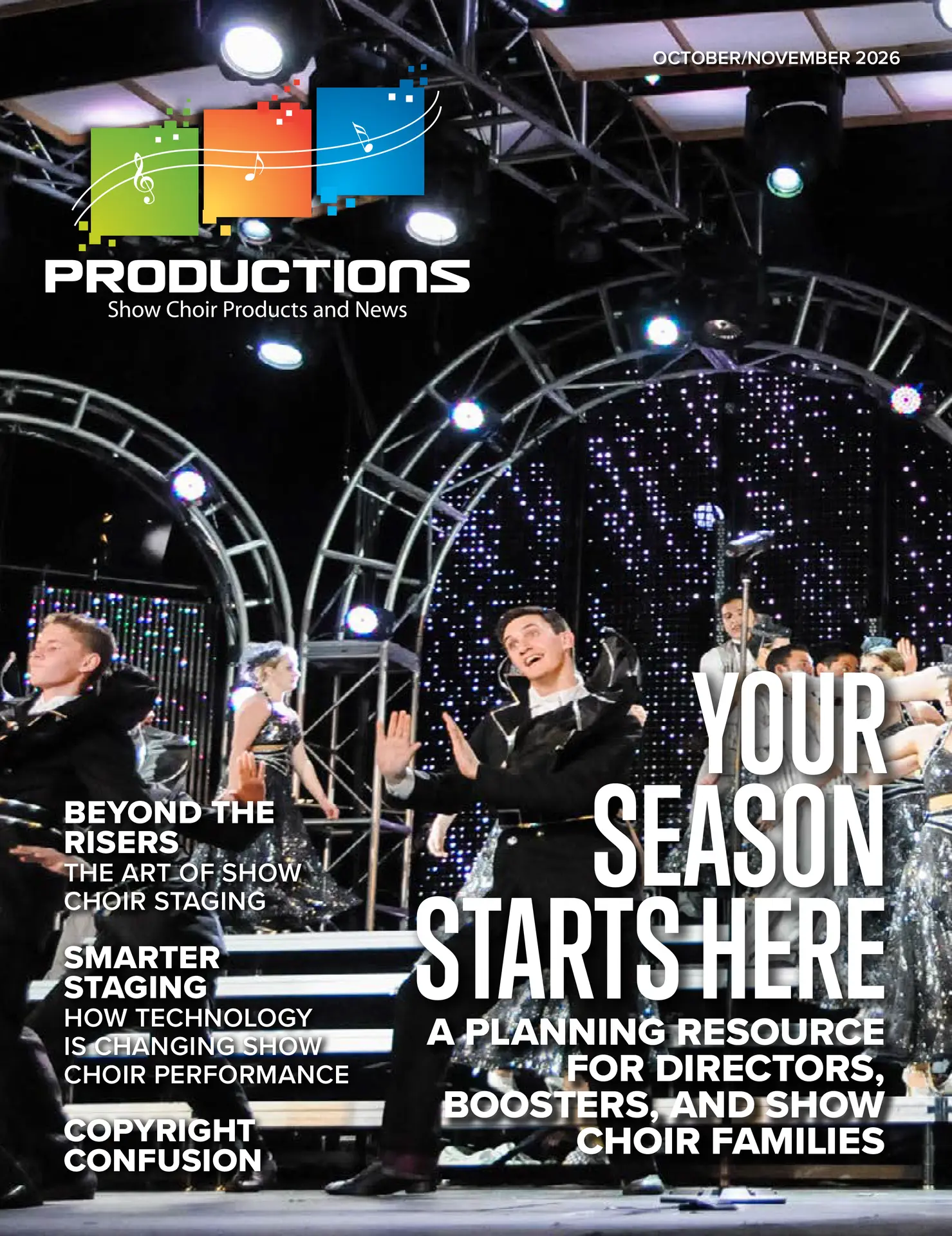


Welcome to the increasingly sophisticated world of show choir staging, where the stage is no longer simply a collection of risers. It is a performance environment, a choreographic instrument, and—in the hands of a creative director—a storytelling tool.
The Stage Is Part of the Story
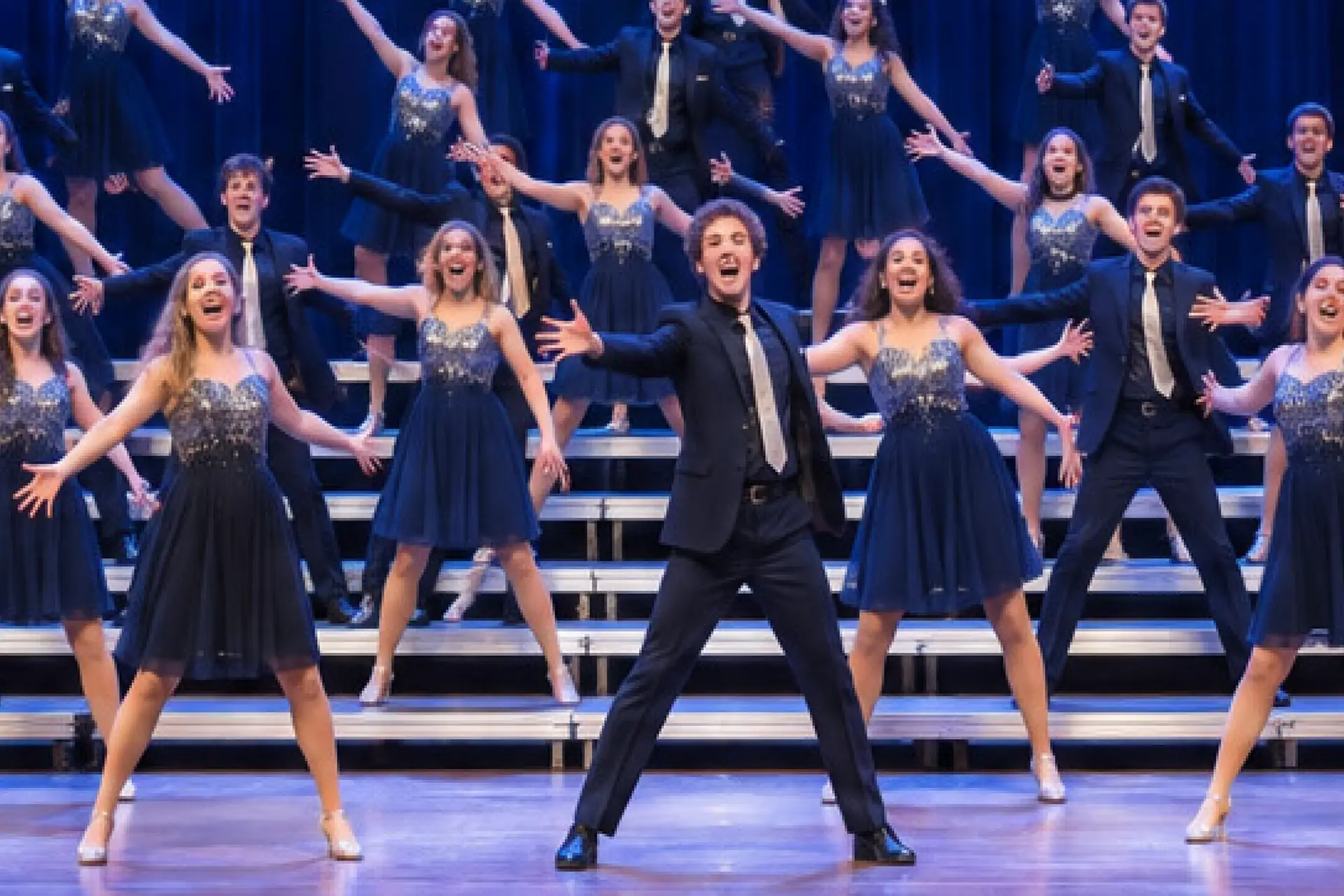
Traditional tiered risers remain a staple of show choir, and for good reason. They provide visibility, establish vertical dimension, and allow large ensembles to present a unified musical picture. But contemporary productions increasingly treat staging as something more dynamic than a stationary backdrop for choreography.
Platforms at varying heights can create visual depth. Movable units can establish new settings between songs. Steps, decks, and strategically arranged levels can frame featured performers, separate musical sections, or give a finale the scale it deserves. Even a relatively simple arrangement can look dramatically different when the director considers how the audience’s eye moves across the stage.
The key is intentionality. More platforms do not automatically create a better production, just as more complicated choreography does not guarantee a more memorable performance.
A useful question for directors is not, “What staging can we add?” but rather, “What does this moment need the audience to see?”
A ballad may benefit from a clean, uncluttered arrangement that emphasizes faces and emotional connection. An upbeat opener might call for multiple levels and strong diagonals that communicate energy before the first lyric. A theatrical number may need a central playing area with carefully controlled entrances and exits.
When staging supports the music and the narrative, the result feels cohesive. When it exists only to impress, it can become another thing the performers must navigate.
Modular Staging: Flexibility Is the New Advantage
What if your physical staging could adapt to different productions?
Modular platforms allow a program to configure its stage around the needs of a particular show rather than committing to one permanent arrangement. Depending on the system, units may be combined into wider decks, arranged at different heights, or stored and transported between venues.
For schools that perform in their own auditoriums, travel to competitions, or share facilities with other programs, flexibility can be especially valuable. A configuration designed for a large home-stage performance may need to be simplified for a smaller competition venue. Portable components can help the production team adapt, provided the equipment is designed for the intended use and the venue’s rules are followed.
Before purchasing, directors and administrators should consider load ratings, platform stability, nonslip surfaces, locking mechanisms, access steps, handrails where required, setup time, storage needs, transport weight, and compatibility between components. They should also confirm that the system can accommodate the number of performers and the types of movement planned.
A platform is not simply a box at a certain height. It is part of a working environment occupied by students who may be singing, dancing, changing direction, and moving in low light. Safe access and predictable movement must take priority over a dramatic visual effect.
The most cost-effective staging solution is not necessarily the least expensive system. It is the one that can be used reliably across multiple productions, transported and stored efficiently, and maintained without excessive labor or repeated replacement purchases.
The Hidden Choreography: Transitions
A show choir can execute its choreography beautifully and still lose momentum during a transition. A riser move takes too long. A prop is in the wrong place. A performer cannot find an open pathway. A group crosses behind the wrong formation, and the audience notices the pause.
These moments deserve the same planning attention as the songs themselves. A transition that feels smooth to performers may look crowded or disorganized from the seats. In some cases, the best solution is to remove a move altogether. If a platform shift does not improve the storytelling or musical impact enough to justify its complexity, a simpler arrangement may produce a stronger performance.
A well-designed transition should feel inevitable. The audience should remain engaged with the story, not wonder why everyone is carrying furniture.
Designing for the Audience—and the Performers
Modern staging decisions should account for more than the view from the center of the auditorium. Directors need to consider students sitting or standing at different elevations, audience members seated toward the sides, lighting angles, camera positions, and the practical needs of performers moving through the space.
Sightline checks can reveal whether a platform blocks faces or whether a featured performer disappears behind a taller singer. A phone recording from several audience positions can provide a quick preliminary assessment, although it cannot replace an in-person check of the full performance space.
Accessibility matters, too. Directors should plan safe, practical participation and access routes for performers with differing mobility needs, while ensuring that pathways, steps, and platform arrangements are appropriate for the individual students and the venue.
Recording and communication technology should also be used thoughtfully. Shared videos, student information, and cloud-based documents need to follow school privacy policies. Recording students should be handled with appropriate permissions, and access to rehearsal materials should be limited to the people who need them.
The goal is a stage that supports the entire ensemble—not merely the most visually dramatic members of it.
Measure the Value Beyond Opening Night
For school administrators and program leaders, staging is an investment in equipment, storage, staff time, transportation, and maintenance. Programs can evaluate staging purchases by considering how many productions use the equipment, how much setup labor it requires, how well it travels, and whether it can serve other school events.
A modular platform system may support choir performances, theatrical productions, award ceremonies, and assemblies, provided each use falls within the equipment’s specifications.
The most memorable moment in a show choir performance happens when the staging, music, choreography, lighting, and performers work together so naturally that the audience forgets how much planning made it possible.
That is the real promise of smarter staging: fewer preventable problems behind the curtain, more time to refine the performance, and a stage that does more than hold the singers.
It helps tell their story.