


From modular platforms and scenic elements to lighting and sound integration, staging equipment must strike a careful balance between durability, efficiency, and adaptability. For directors and technical coordinators, the goal is clear: create a system that enhances performance while minimizing logistical strain. Achieving that goal requires a thoughtful approach rooted in both engineering principles and practical experience.
Structural Integrity: The Foundation of Performance
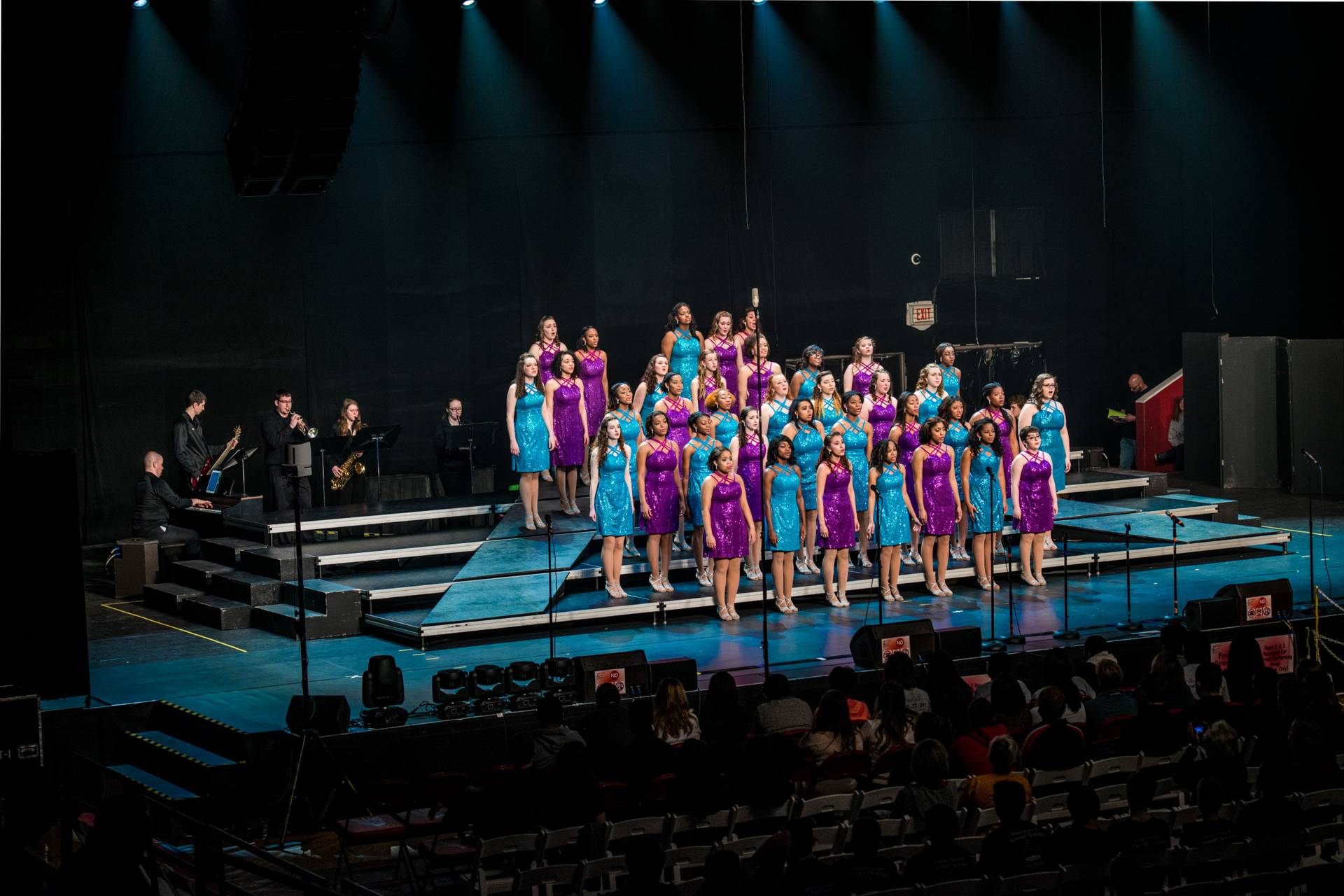
At the core of any staging setup are platforms. These units define performance levels, create visual depth, and support dynamic choreography. For traveling show choirs, platforms must meet three critical criteria: strength, stability, and modularity.
Load-bearing capacity is the first consideration. Platforms must safely support multiple performers executing synchronized movement, often with significant force generated by jumps, turns, and directional changes. Industry standards typically recommend a minimum live load rating of 100 pounds per square foot, though higher ratings provide additional safety margins for high-energy performances.
Equally important is structural rigidity. Flexing or vibration in a platform not only creates safety concerns but also disrupts performer confidence and visual consistency. High-quality platforms utilize reinforced frames—commonly aluminum or steel—with cross-bracing systems that distribute weight evenly. Deck surfaces are typically constructed from high-density plywood or composite materials with non-slip coatings to ensure traction under stage lighting conditions.
Modularity is essential for transportation and adaptability. Platforms designed in standardized dimensions (e.g., 4’x8’ or 4’x4’) allow for flexible configurations that can be adjusted based on venue size and performance needs. Quick-connect hardware systems significantly reduce assembly time while maintaining secure connections between units.
Scenic Design: Balancing Impact and Portability
Set pieces serve as the visual identity of a show, but in a traveling context, they must be engineered for efficiency. Unlike fixed theatrical productions, show choir sets must be transported frequently, assembled quickly, and stored compactly.
Weight is a primary constraint. Materials such as aluminum framing, corrugated plastic panels, and lightweight composites are commonly used to reduce overall mass without sacrificing durability. Foam-based scenic elements, reinforced with hard coatings, provide additional opportunities for creative design while maintaining portability.
Breakdown capability is equally critical. Scenic elements should be designed to disassemble into manageable components that fit within standard transport vehicles. Hinged panels, collapsible frames, and tool-less assembly systems can dramatically improve load-in and load-out efficiency.
Durability must not be overlooked. Traveling equipment is subject to repeated handling, vibration during transport, and variable environmental conditions. Protective finishes, reinforced edges, and secure fastening systems extend the lifespan of scenic components and reduce maintenance requirements over the course of a season.
Lighting Systems: Portable Precision
Lighting plays a significant role in enhancing visual storytelling, but traveling show choirs must operate within strict logistical and technical constraints. Unlike fixed venues with permanent lighting rigs, portable systems must be self-contained, efficient, and adaptable to different electrical infrastructures.
LED lighting fixtures have become the standard for traveling ensembles due to their low power consumption, minimal heat output, and versatility. Compact LED pars, strips, and moving heads provide a wide range of color and effect options without the need for bulky equipment or extensive power distribution systems.
Mounting solutions must be designed with portability in mind. Lightweight truss systems, collapsible stands, and integrated mounting points on platforms or set pieces allow for flexible positioning while minimizing setup complexity. Pre-wired configurations can further streamline installation, reducing the risk of connection errors and saving valuable time during transitions.
Control systems should prioritize simplicity and reliability. Pre-programmed lighting cues stored on compact controllers or software platforms enable consistent execution across venues. Wireless DMX technology can reduce cable management challenges, though it must be implemented with consideration for signal stability in crowded competition environments.
Sound Reinforcement: Consistency Across Venues
Sound is one of the most variable elements in traveling performances. Each venue presents unique acoustic characteristics, from highly reverberant gymnasiums to acoustically treated auditoriums. A well-designed sound system must provide clarity, balance, and consistency regardless of these conditions.
Microphone selection and placement are foundational. Headset microphones are widely used in show choir for their ability to maintain consistent pickup during movement. However, they require careful positioning and secure mounting to ensure uniform sound quality across performers.
Mixing systems must be capable of handling multiple input sources while providing precise control over balance and equalization. Digital mixers offer significant advantages in this regard, allowing for scene recall, onboard processing, and compact form factors suitable for transport.
Speaker systems should be selected based on coverage requirements and portability. Line array systems provide even distribution in larger venues, while powered speakers offer a more compact solution for smaller spaces. Subwoofers may be included to enhance low-frequency response, particularly when using backing tracks or live instrumentation.
Acoustic variability requires adaptability. Equalization settings that work in one venue may not translate to another. Sound technicians must be prepared to make real-time adjustments during sound checks, addressing issues such as feedback, frequency buildup, and uneven coverage.
Mobility and Efficiency: The Traveling Imperative
The success of a traveling staging system is ultimately measured by its efficiency. Load-in times, setup duration, and tear-down processes all impact a group’s ability to perform effectively within tight competition schedules.
Transport considerations begin with vehicle capacity and configuration. Equipment should be designed to fit efficiently within trailers or trucks, maximizing space utilization while ensuring safe handling. Custom cases, labeled components, and standardized packing systems contribute to faster loading and unloading.
Assembly processes should be intuitive and repeatable. Clear labeling, color-coded components, and standardized hardware reduce the likelihood of errors and minimize the need for specialized tools. Training students and support staff in setup procedures can further improve efficiency and distribute workload.
Weight distribution is another critical factor. Equipment must be manageable for the individuals responsible for handling it, particularly in programs where students play an active role in setup. Lighter components not only reduce physical strain but also improve safety during transport and assembly.
Scaling for Ensemble Size
Staging requirements vary significantly based on ensemble size, and equipment systems must be tailored accordingly.
Large Ensembles
Groups with 40 or more performers require extensive staging solutions to maintain visual clarity and accommodate complex choreography. Multi-level platform configurations are often necessary to ensure all performers remain visible. Larger sets and more advanced lighting systems can enhance production value, but they must be carefully engineered to remain transportable. Modular designs are essential to allow for partial setups in smaller venues.
Mid-Size Ensembles
For groups in the 20–40 performer range, balance is key. Platforms should provide sufficient elevation changes without overwhelming the stage. Scenic elements should be impactful, streamlined, focusing on versatility rather than scale. Lighting systems can be moderately complex should remain manageable within limited setup times.
Small Ensembles
Smaller groups benefit from simplicity and precision. Minimal platform use—often limited to one or two levels—can create effective visual interest without complicating logistics. Scenic elements should be lightweight and multifunctional. Portable lighting and sound systems must be efficient and easy to deploy, allowing the group to focus on performance quality rather than technical complexity.
Integration and Planning
The most effective staging systems are those designed holistically. Platforms, sets, lighting, and sound should not be treated as separate components but as interconnected elements of a unified performance environment.
Early planning is essential. Directors and technical coordinators should collaborate during the show design phase to ensure that staging concepts are feasible within logistical constraints. Considerations such as transport capacity, setup time, and venue variability must inform design decisions from the outset.
Testing and iteration play a critical role. Rehearsing with full staging equipment allows performers to adapt to spatial and technical conditions, while also providing an opportunity to identify and address potential issues before competition.
Conclusion
Traveling show choir staging is a complex technical endeavor that careful planning, engineering insight, and practical execution. By prioritizing structural integrity, portability, and system integration, programs can create staging environments that enhance performance while remaining efficient and reliable.
In a competitive landscape where every detail matters, well-designed staging equipment is not merely a support system—it is a strategic advantage.