



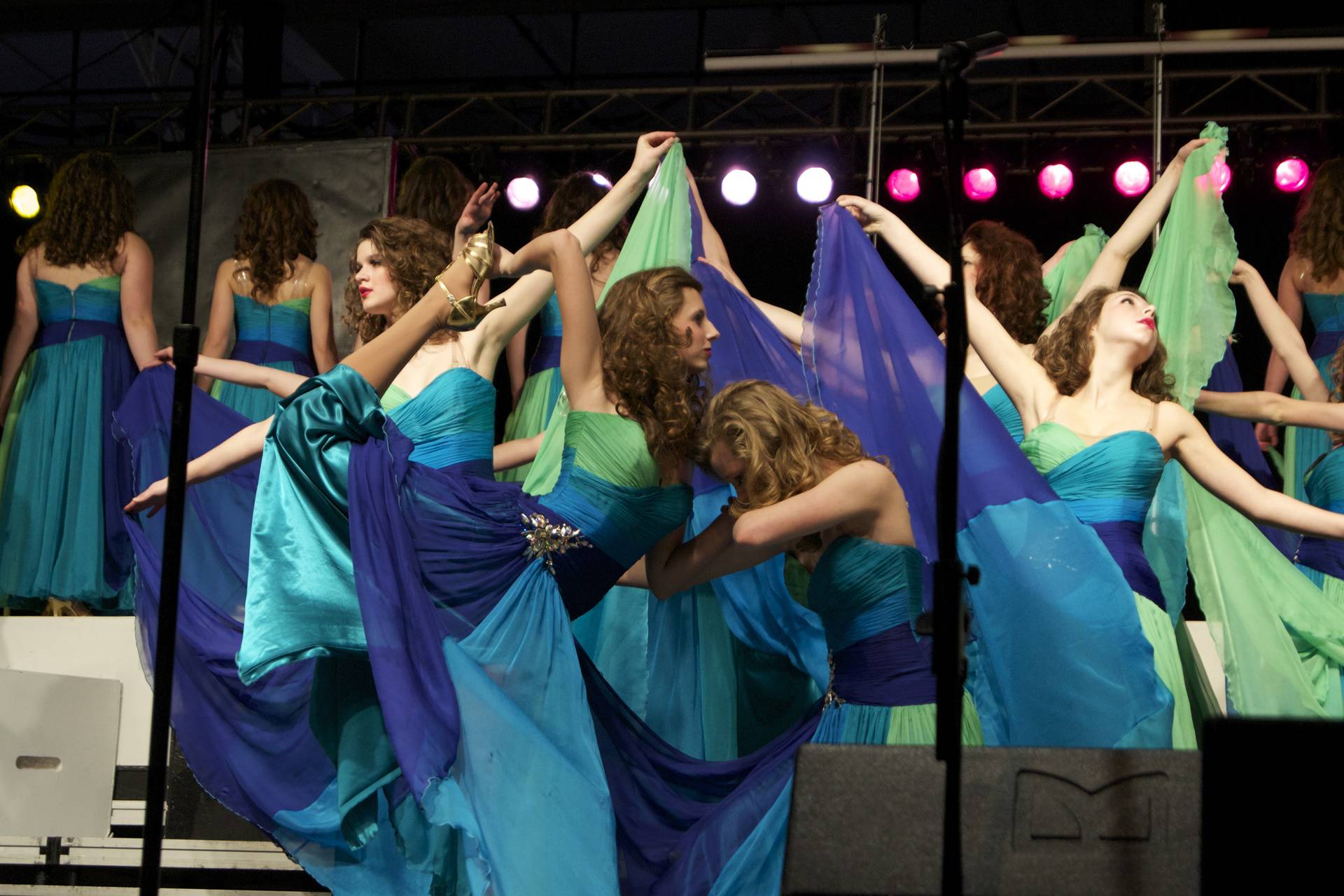
Camps and clinics have long been a staple of the show choir world, but their value goes far beyond learning a few counts of eight or polishing vowels. Whether it’s a national-level intensive, a regional weekend clinic, or a local day camp down the road, these experiences can transform both students and directors in ways that last far beyond the final showcase.
And yes, they usually do it while running on minimal sleep, maximum energy, and an alarming amount of pizza.
The Reset Button You Didn’t Know You Needed
Let’s start with the obvious: camps get you out of your normal environment. That alone is worth the price of admission.
Rehearsing in the same choir room day after day can create habits—good and bad—that are hard to break. Camps disrupt that routine in the best possible way. Suddenly, students are in a new space, working with new instructors, hearing new perspectives, and realizing that maybe—just maybe—there’s more than one way to count a transition.
For directors, this can feel like hitting a reset button. You get to watch your students respond to different teaching styles, pick up new techniques, and sometimes understand a concept in five minutes that you’ve been explaining since August. It’s not frustrating—it’s freeing. (Mostly.)
National Camps: The Big Leagues
National show choir camps are the full experience. We’re talking multiple days, top-tier clinicians, and students from all over the country who somehow all know the exact same warm-up exercises.
These camps offer something that’s hard to replicate anywhere else: scale. Students are exposed to a wide range of talent levels, styles, and expectations. They see what’s possible—not just in their own program, but across the broader show choir community.
For students, this can be eye-opening. That sophomore who thought they were “pretty good” suddenly meets a senior from across the country who can sing, dance, and emote like they’ve been doing it since birth. It’s humbling, but in the best way. It raises the bar.
For directors, national camps are a goldmine of ideas. Choreography trends, vocal techniques, rehearsal strategies—you’ll come home with a notebook full of “we should try this” moments. You may also come home slightly exhausted and wondering if your students can, in fact, handle eight hours of rehearsal a day. (They can. You might not.)
Another major benefit is networking. Students build friendships that last well beyond camp, and directors connect with colleagues who understand the unique joys and challenges of the activity. There’s something reassuring about realizing that everyone else is also trying to figure out how to fit one more set change into a three-minute opener.
Regional Camps: The Sweet Spot
If national camps are the big stage, regional camps are the perfect middle ground. They offer many of the same benefits—expert instruction, fresh perspectives, and a change of scenery—but with a bit more accessibility.
Travel is often easier, costs are lower, and the time commitment is more manageable. For many programs, regional camps provide the ideal balance between impact and practicality.
Students still get the chance to work with clinicians who bring new energy and ideas, but the environment often feels a bit more familiar. You’re likely to see neighboring schools, friendly rivals, and maybe even that group you’ve been trying to beat at competition for the last three seasons.
There’s a unique camaraderie that comes from this setting. It’s competitive, sure—but it’s also collaborative. Students learn from each other, support each other, and occasionally realize that the “competition” is just as nervous about that dance break as they are.
For directors, regional camps are an efficient way to recharge creatively. You’ll pick up new tools without needing to overhaul your entire program. Sometimes, a single staging idea or vocal exercise can make a noticeable difference once you’re back in your own rehearsal space.
Local Day Camps: The Underrated Powerhouse
Now let’s talk about the unsung hero of show choir development: the local day camp.
These are often shorter—sometimes just a day or a weekend—and may not have the same level of production as larger camps. But don’t underestimate their impact.
Local camps are incredibly accessible. They require less travel, lower costs, and minimal disruption to busy schedules. This makes them an excellent option for introducing younger students to the world of show choir or giving your entire group a quick boost before the season ramps up
Because of their size, local camps often allow for more individualized attention. Students can ask questions, receive direct feedback, and build confidence in a less intimidating environment. For beginners especially, this can be a game changer.
And let’s be honest—sometimes it’s nice to improve your skills without living out of a suitcase for a week.
For directors, local camps can serve as a strategic tool. Need to clean up basics? Reinforce technique? Build ensemble cohesion? A well-timed day camp can accomplish all of that without requiring a major logistical operation.
Skill Building That Actually Sticks
One of the biggest advantages of camps and clinics is the way they reinforce fundamental skills.
Vocal technique, for example, often gets a fresh perspective. A clinician might explain breath support or vowel shaping in a way that suddenly clicks for students. It’s not that the concept is new—it’s that the delivery is different.
The same goes for choreography. Camps expose students to new styles, combinations, and approaches to movement. They learn how to pick up choreography more quickly, execute it more cleanly, and perform it with greater confidence.
But perhaps the most important skill developed at camp is adaptability. Students learn to take direction from multiple instructors, adjust to new expectations, and perform in unfamiliar settings. These are skills that translate directly to competition—and beyond.
Confidence: The Real Takeaway
If there’s one thing camps consistently deliver, it’s confidence.
Students return from camp standing a little taller, singing a little stronger, and approaching rehearsals with a renewed sense of purpose. They’ve seen what they’re capable of, and they’re eager to bring that energy back to their home program.
This confidence isn’t just about performance—it’s about ownership. Students begin to take greater responsibility for their individual roles within the group. They listen more actively, support their peers, and contribute to a stronger overall ensemble.
And yes, they’ll probably teach everyone else the choreography they learned at camp—whether you asked them to or not.
A Boost for Directors, Too
It’s easy to focus on the benefits for students, but directors gain just as much from camps and clinics.
Stepping outside your own program, even briefly, can provide valuable perspective. You see what other groups are doing, hear different approaches, and gather ideas that can enhance your own teaching.
Perhaps more importantly, camps can reignite your own enthusiasm. The energy, creativity, and sheer joy of the experience serve as a reminder of why you got into this activity in the first place.
And sometimes, that’s exactly what you need halfway through a long season.
Making the Most of the Experience
To get the full benefit of any camp or clinic, a little preparation goes a long way.
Set clear expectations for your students. Encourage them to be open, engaged, and willing to step outside their comfort zones. Remind them that it’s okay to make mistakes—that’s part of the process.
After camp, take time to reflect. What did you learn? What can be applied to your current show? What changes will have the greatest impact?
Even small adjustments can lead to significant improvements.
Final Thoughts
Camps and clinics are more than just summer activities or preseason tune-ups. They are opportunities for growth, connection, and transformation.
Whether it’s a national intensive, a regional gathering, or a local day camp, each experience offers something valuable. Together, they create a well-rounded approach to developing both students and directors.
And while the memories of long rehearsals and late-night bonding may fade, the skills, confidence, and inspiration gained at camp tend to stick around.
Right alongside a few inside jokes, a couple of new warm-ups, and at least one story that probably shouldn’t be told in front of parents.